
GraphQL with Apollo
GraphQL with Apollo
GraphQL is a data query language which provides an alternative to REST and ad-hoc web service architectures. It allows clients to define the structure of the data required, and exactly the same structure of the data is returned from the server.
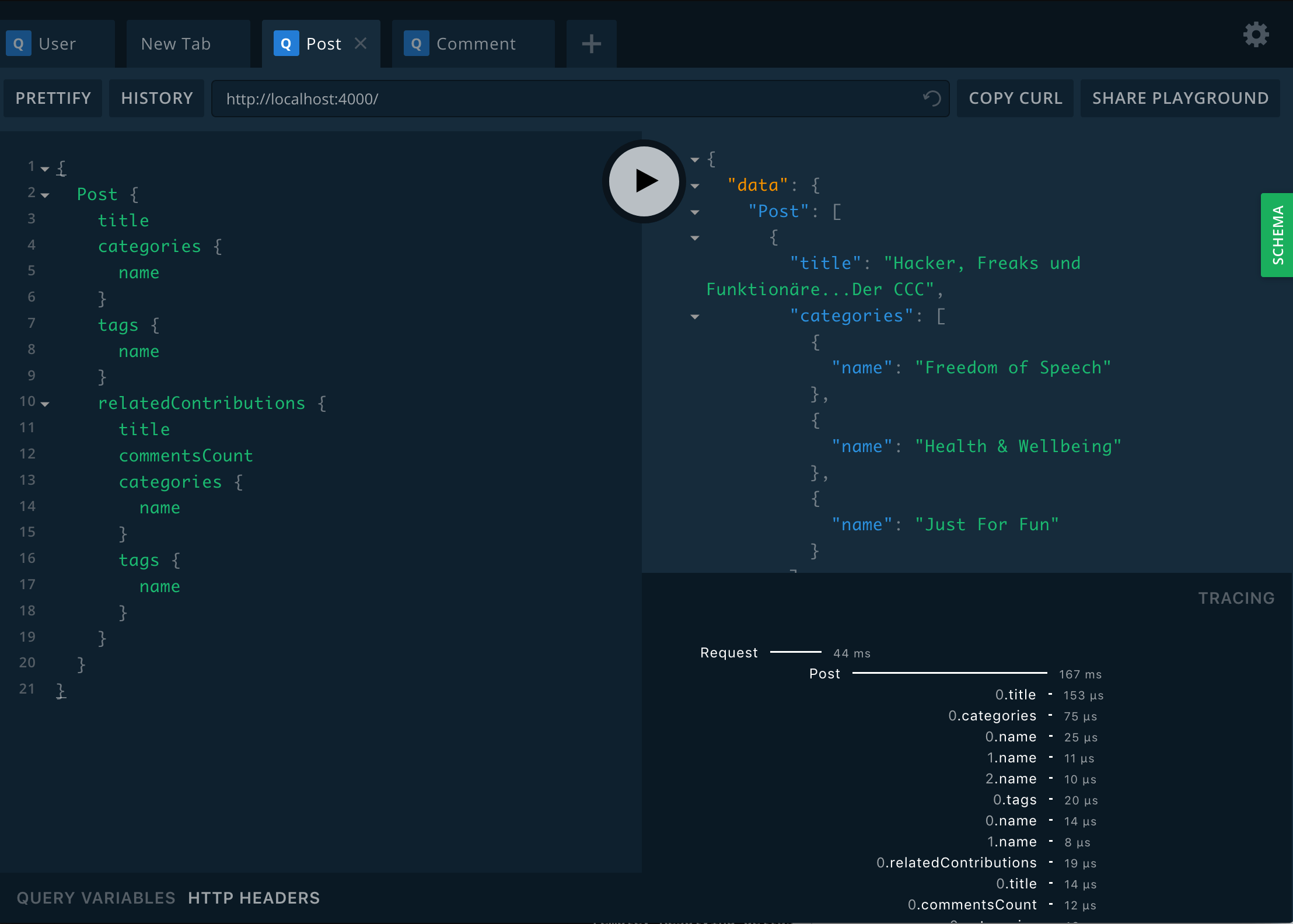
We have a closer description for the GraphQL Playground.
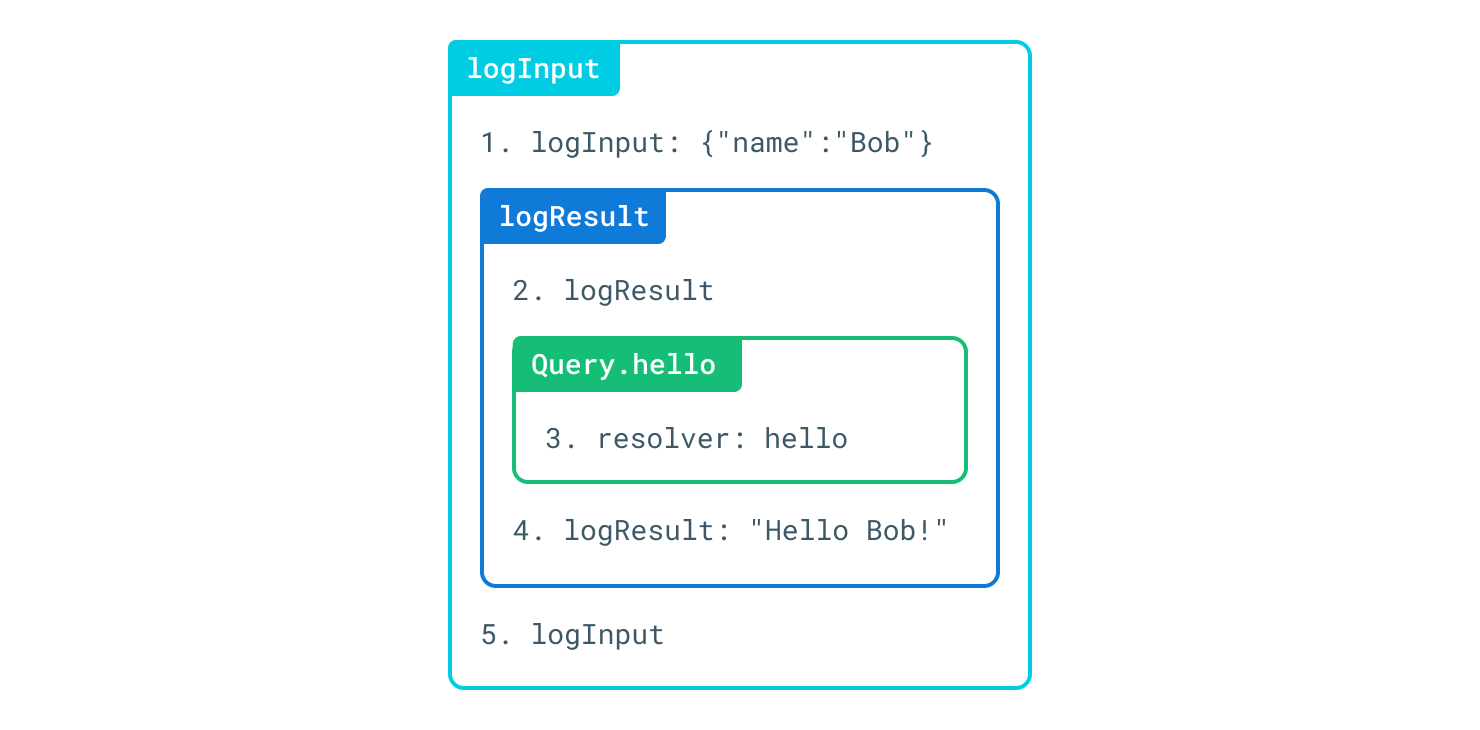
Middleware keeps resolvers clean
A well-organized codebase is key for the ability to maintain and easily introduce changes into an app. Figuring out the right structure for your code remains a continuous challenge - especially as an application grows and more developers are joining a project.
A common problem in GraphQL servers is that resolvers often get cluttered with business logic, making the entire resolver system harder to understand and maintain.
GraphQL Middleware uses the middleware pattern (well-known from Express.js) to pull out repetitive code from resolvers and execute it before or after one of your resolvers is invoked. This improves code modularity and keeps your resolvers clean and simple.
API reference documentation
The GraphQL API has a generated, browsable HTML reference. There are two audiences and two ways to consume it:
For developers: explore the live API
Run the backend (npm run dev) and open the GraphQL endpoint (GRAPHQL_URI, default http://localhost:4000/) in a browser to get an interactive playground/sandbox where you can run queries against your data. See the GraphQL Playground notes.
For users: static HTML reference (SpectaQL)
A self-contained HTML page is generated with SpectaQL:
npm run docs:api
# → backend/public-docs/index.html  (open in a browser)
docs:api runs two steps:
npm run schema:printwritesbackend/schema.graphql— the augmented runtime schema. This matters:neo4j-graphql-js'smakeAugmentedSchemagenerates queries,filter/orderByarguments and CRUD mutations that do not exist in the hand-writtensrc/graphql/**/*.gqlfiles. Introspecting the built schema (rather than the SDL files) is therefore the only complete source of truth. The printer builds the augmented schema fromtypeDefsonly (no resolvers), so it pulls in no runtime config and needs no env and no Neo4j connection — it just emits the SDL, which works anywhere (CI, Docker).spectaql spectaql.ymlrenders the SDL into static HTML underpublic-docs/(git-ignored). Configure title, intro and endpoint inspectaql.yml.
Both schema.graphql and public-docs/ are git-ignored build artifacts — docs:api regenerates schema.graphql on every run, so it never needs to be committed.
Hosting: embedded in the documentation site
The API reference is part of the VuePress documentation site: the deploy-documentation workflow generates it into .vuepress/public/api (via the repo-root npm run docs:api) and vuepress build ships it to docs.ocelot.social/api (linked from the "API" navbar entry). Locally, docker compose up docs serves the whole site, and cd backend && npm run docs:api still produces the standalone public-docs/ HTML.